Sponser will be closed on Friday afternoon, 12 December 2025. We thank you for your understanding and look forward to welcome you again on Monday, 15 December 2025. Your Sponser Sport Food Team

Search

This section doesn’t currently include any content. Add content to this section using the sidebar.

Image caption appears here

Electrolytes: Important for Athletic Performance and Hydration

Electrolytes are essential when it comes to sports because they regulate the body's water balance and fluid transport. They support nutrient transport, stabilise the pH value, and influence heart and muscle function. Electrolytes, particularly sodium, must be replaced during intense exercise in hot conditions to avoid a drop in performance, cramps and concentration problems. Athletes should replace not only sodium, but also potassium, calcium, magnesium and chloride, which are also important electrolytes.

Competition

Orange


from € 2,20 EUR

Competition

Citrus


from € 19,50 EUR

Competition

Raspberry


from € 19,50 EUR

Liquid Energy

Salty


from € 1,90 EUR

Competition

Fruit Mix


from € 19,50 EUR

Isotonic

Red Orange


from € 2,00 EUR

Electrolytes

Red Orange


from € 5,50 EUR

Electrolytes

Berry


from € 5,50 EUR

Electrolytes

Lemon


from € 5,50 EUR

Electrolytes

Fruit Mix


from € 5,50 EUR

Isotonic

Peach


from € 16,00 EUR

Competition

Cool Mint


from € 19,50 EUR

Isotonic

Citrus


from € 16,00 EUR

Salt Caps

Salt Caps


€ 29,90 EUR

Isotonic

Fruit Mix


from € 16,00 EUR

Isotonic

Ice Tea


€ 23,00 EUR

Electrolytes

Cherry


from € 5,50 EUR

Electrolytes in SPONSER sports drinks

SPONSER offers various products for electrolyte replenishment during exercise. The Electrolytes effervescent tablets are practically calorie-free and contain sodium, magnesium, calcium, potassium and chloride. They are particularly recommended for basic training, leisure activities and low-carbohydrate diets. For more intense exercise, SPONSER recommends its sports drinks Competition®, Isotonic, Long Energy and Carbo Fuel, which contain electrolytes as well as carbohydrates to ensure an energy supply during longer or more intense sessions. The products are available in a variety of flavours and are easy to dose. SPONSER also offers Salt Caps for targeted electrolyte replenishment. Salt Caps are ideal for long endurance activities, multi-day events and situations involving heavy sweating and high temperatures, when sweat loss can impact performance. Taking two capsules with 500 ml of water or dissolving their content in it provides the equivalent of an energy-free electrolyte drink. Salt Caps and Electrolytes are also ideal for training in a fasted state to promote fat metabolism.

Bars, Liquid Energy and Carbo Hydrogels for electrolyte intake

In addition to drinks, SPONSER bars, Carbo Hydrogels and Liquid Energy gels can also be used to a certain extent for electrolyte intake. Liquid Energy products contain several carbohydrate sources along with the electrolytes sodium and potassium. The Liquid Energy «Salty» flavour has an increased salt content, making it ideal for endurance athletes looking for a constant supply of energy and electrolytes that are easily tolerated. Carbo Hydrogels, which are more liquid, provide carbohydrates as well as sodium, helping to maintain electrolyte and energy balance during training or competition. The High Energy Bar Salty+Nuts has a high salt content and is designed to compensate minerals lost through sweating and maintain performance, provided one prefers and can tolerate solid food during the specific exercise intensity.

FAQs on Electrolytes effervescent tablets, electrolyte deficiency, hydration

Sodium loss in sweat varies greatly from person to person and can range from 400 to 1600 mg per litre of sweat, depending on factors such as individual sweat rate, intensity and climate. To ensure long-lasting, intense athletic performance, it is worth determining the individual sodium loss using a sweat test. This will help determine the correct dosage of electrolytes for endurance training, ensuring maximum performance without dehydration and mineral deficiency.
Salt and sodium are not the same, but are often confused. Sodium is a mineral and occurs naturally mostly in compounds, most commonly as sodium chloride – our so-called table salt. Salt therefore consists of sodium and chloride. 1 gram of table salt contains about 0.4 grams of sodium. Warnings about excessive salt consumption refer to sodium chloride, not other sodium compounds. However, food labels must indicate their hypothetically calculated salt content, not their pure sodium content, as if all sodium were present in the form of sodium chloride in food, which is highly controversial from a scientific and nutritional point of view. SPONSER declares the hypothetical salt content on its products where required by law. For certain products that have been specially developed for athletic performance, the sodium content and other minerals are also indicated additionally.
People with high blood pressure are usually warned against high salt consumption. Sodium is generally calculated as salt using a conversion factor (sodium x 2.5 = sodium chloride/salt), which is scientifically controversial and primarily a food law regulation. For example, sodium bicarbonate has completely different nutritional effects than sodium chloride. In general, mineral salts are important for many body functions during sport, especially for fluid balance and nerve and muscle function. During intense physical exertion and heavy sweating, their intake is essential for athletes in order to regulate fluid loss, maintain muscle function and prevent cramps and a drop in performance.
SPONSER usually declares the electrolyte content individually for the most important minerals, such as sodium, magnesium, calcium, potassium and chloride. This information can be found in the nutrition facts or in a separate table on the packaging or in the product data sheet. For products such as Electrolytes effervescent tablets, for example, the amount of sodium per serving is indicated in milligrams. This allows to specifically track the amount of electrolytes consumed in each serving.
They enter the bloodstream via the small intestine and are distributed throughout the body. Absorption occurs passively through diffusion or actively via special transport proteins in the intestinal wall. The body regulates the concentration of electrolytes very precisely in order to maintain important functions in the nervous system, muscles and fluid balance. Too much or too little electrolytes can lead to health problems, which is why a balanced intake is particularly important in sport.
Taking electrolytes during strength training supports the regulation of fluid balance and ensures that nutrients are transported efficiently to the muscles. This is crucial for maintaining performance during training and preventing muscle cramps. Especially during intense exercise and heavy sweating, a targeted intake of electrolytes during training is also beneficial for strength athletes.

Tested Trusted Proven

Tested Trusted Proven

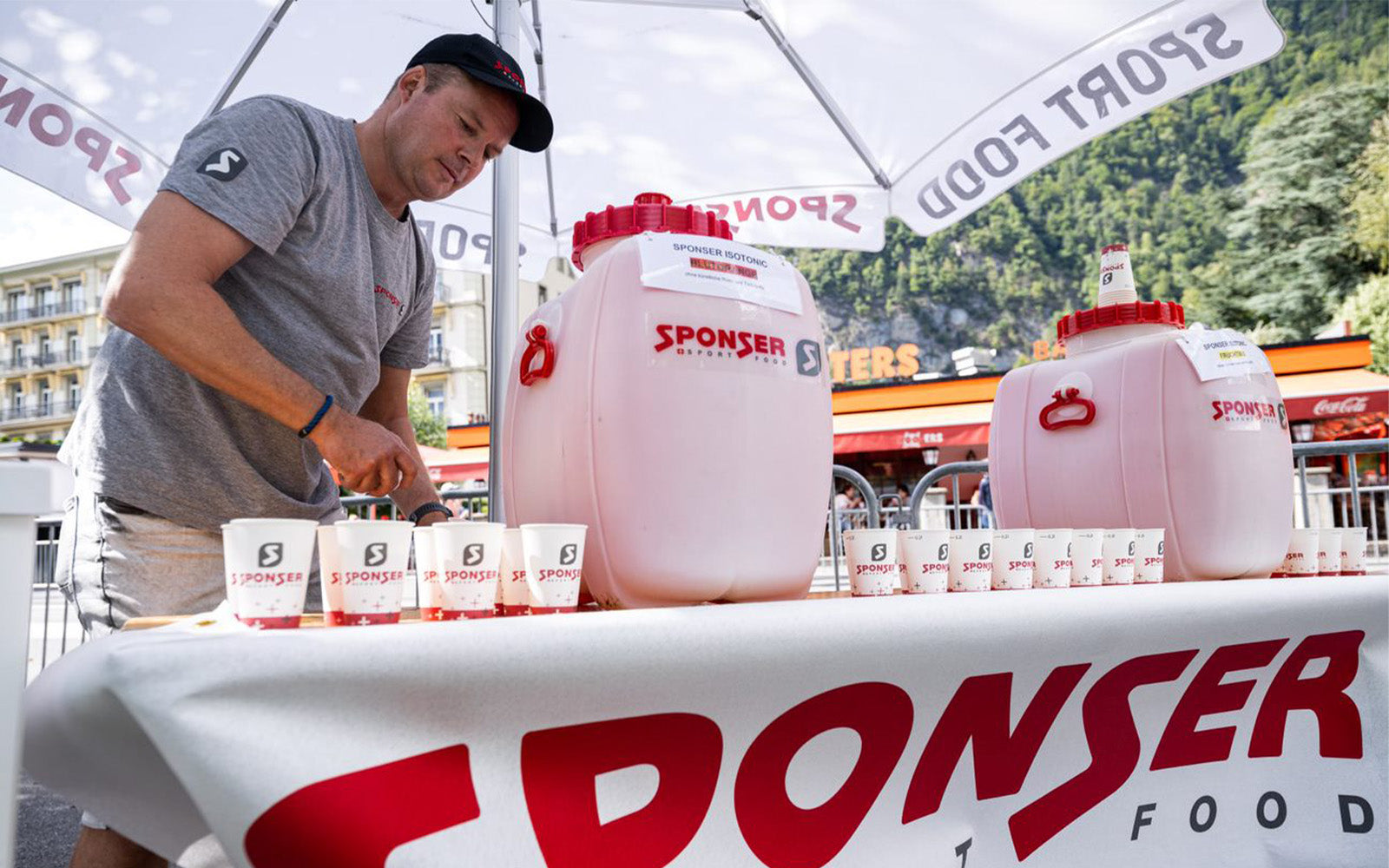
At more than 100 sporting events with more than 100,000 athletes every year, SPONSER® products are not only put through their paces under laboratory conditions, but also in practical tests. So not only our products, but also our athletes are always one step ahead of the competition.


At more than 100 sporting events with more than 100,000 athletes every year, SPONSER® products are not only put through their paces under laboratory conditions, but also in practical tests. So not only our products, but also our athletes are always one step ahead of the competition.